

If you are planning building work on or near a shared boundary, you may have heard the term party wall agreement and wondered whether it applies to your project.
Many homeowners only discover they need one after work has already been planned, or worse, after a neighbour raises a concern. Understanding when a party wall agreement is required can help you avoid delays, disputes, and unnecessary stress. This guide explains when you need a party wall agreement, what types of work are covered, and what to do if your project falls under the Party Wall etc. Act 1996.
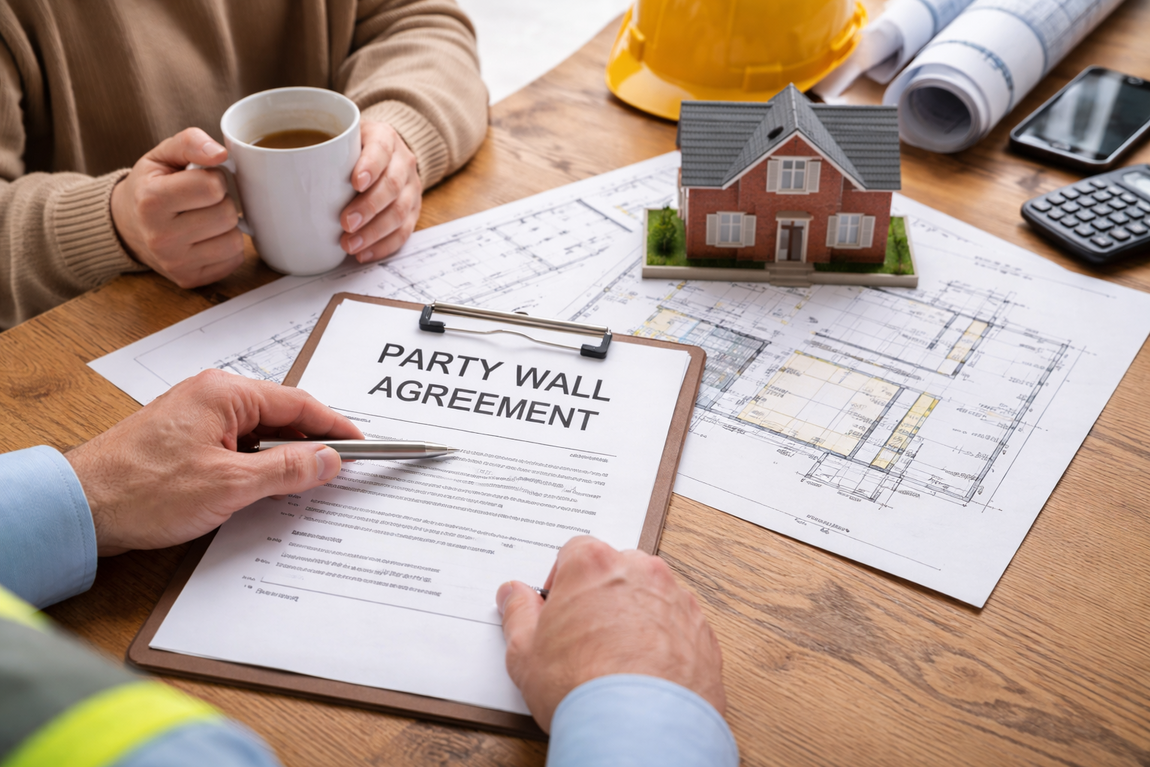
Party Wall Agreements are an important aspect of many renovations
What Is a Party Wall Agreement?
A party wall agreement is a legal document required under the Party Wall etc. Act 1996. It exists to protect both you and your neighbour when building work affects a shared wall, boundary, or nearby structure.
The agreement sets out:
- What work is being carried out
- When it will take place
- How it will be done
- What happens if damage occurs
It is designed to prevent disputes and ensure everyone understands their rights and responsibilities before work begins.
When Is a Party Wall Agreement Required?
You will usually need a party wall agreement if your planned work involves any of the following.
1. Work to a Shared Wall
If you are carrying out work directly to a wall shared with a neighbour, a party wall agreement is likely required.
This includes:
- Removing or altering a shared internal wall
- Cutting into a party wall to install steel beams (RSJs)
- Raising, lowering, or thickening a party wall
This is particularly common during wall removals and structural alterations, especially in terraced or semi-detached properties across Leeds, Bradford and wider West Yorkshire.
2. Building on or Near a Boundary Line
You may need an agreement if you plan to:
- Build directly on the boundary line
- Construct foundations close to a neighbour’s property
- Extend a wall up to or astride the boundary
This often applies to extensions, side returns, or rear additions.
3. Excavation Near a Neighbour’s Property
Excavation work can also trigger the need for a party wall agreement, even if you are not touching the shared wall itself.
You will usually need one if:
- You excavate within 3 metres of a neighbouring building and go deeper than their foundations
- You excavate within 6 metres and your foundations intersect at an angle
This is a common requirement for extensions, basement work, and structural foundation upgrades.
What Types of Projects Commonly Need a Party Wall Agreement?
In practical terms, party wall agreements are often needed for:
- Internal wall removals
- RSJ and steel beam installation
- Kitchen renovations involving layout changes
- House extensions
- Loft conversions
- Structural underpinning
If your project involves structural work rather than cosmetic changes, it is always worth checking early.
What Happens If You Don’t Get One?
Failing to obtain a party wall agreement when one is required can lead to:
- Work being delayed or stopped
- Legal disputes with neighbours
- Increased costs
- Strained relationships with adjoining owners
Even if relations are good, it is far easier to agree matters formally before work starts rather than trying to resolve issues later.
Do All Neighbours Have to Agree?
Your neighbour does not have to give permission for the work itself, but they do have rights under the Act.
They can:
- Consent to the work
- Request a party wall surveyor
- Appoint their own surveyor (often at your cost)
This is why early communication is important. Many disputes arise simply because neighbours feel surprised or excluded from the process.
Who Is Responsible for Organising the Agreement?
The responsibility sits with the building owner, meaning the person carrying out the work.
This usually involves:
- Serving a formal party wall notice
- Allowing time for neighbours to respond
- Appointing surveyors if required
While builders do not issue party wall agreements themselves, experienced contractors can help identify when one is likely needed and advise you to seek professional guidance early.
How Early Should You Think About It?
Ideally, party wall considerations should be addressed before finalising your build schedule.
This allows time for:
- Notices to be served
- Discussions with neighbours
- Surveyor involvement if required
Leaving it too late can delay the start of works by weeks.
How This Relates to Structural Work
Many projects that require a party wall agreement also involve structural changes, such as wall removals or steel beam installation.
If you are planning structural alterations, it is sensible to consider:
- Whether a party wall agreement is required
- Whether building regulations approval is needed
- How the work will be safely sequenced
Understanding these factors early helps keep projects running smoothly.
Making Sure Your Project Starts on the Right Foot
Not every project requires a party wall agreement, but many homeowners are surprised to learn that theirs does.
If your work affects a shared wall, boundary, or nearby foundations, checking your obligations early can save time, money, and frustration later on.
When in doubt, it is always better to ask before work begins.