Many homeowners only become aware of wall tie failure when visible cracks start appearing in their brickwork.
In older homes across Leeds, Bradford, Huddersfield and West Yorkshire, this is a surprisingly common issue - and one that often goes undiagnosed for years. Understanding why wall ties fail, and which properties are most at risk, can help you take early action and avoid more serious structural problems later on.
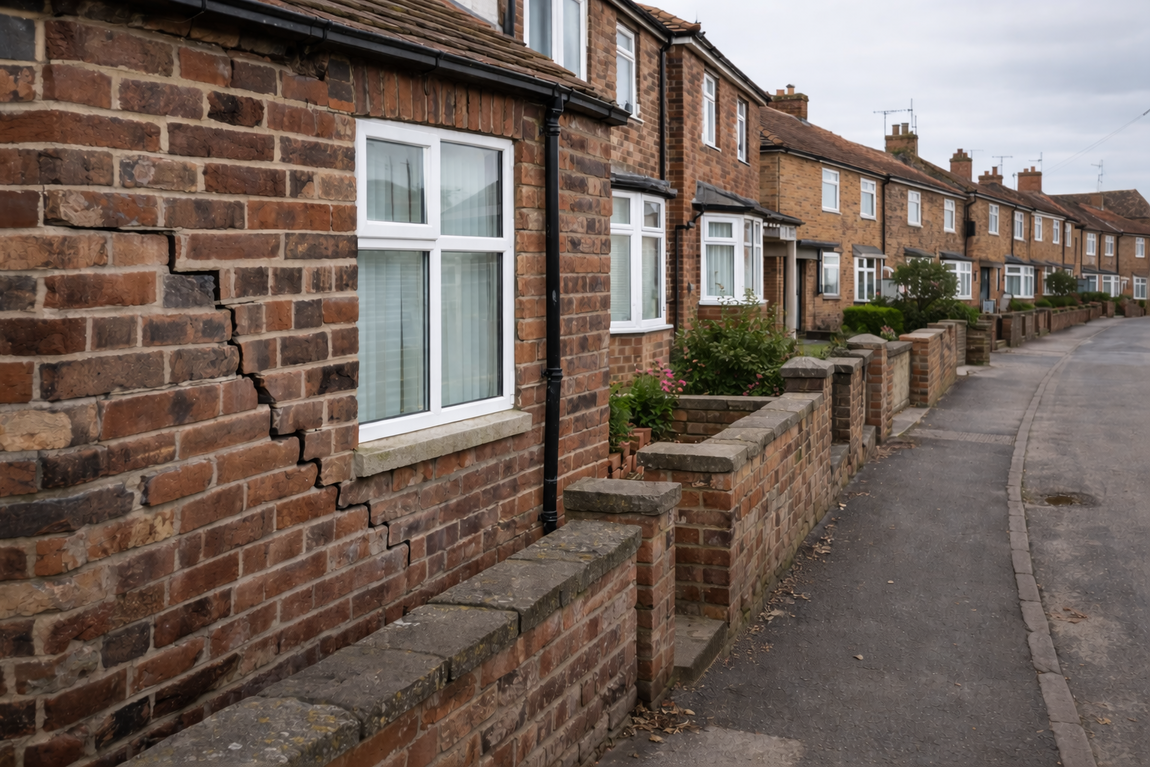
Typical Wall Tie Failure in a Yorkshire Home
What Are Wall Ties and Why Do They Matter?
Wall ties are metal components embedded within cavity walls, designed to connect the inner and outer brickwork together. Their role is to provide lateral support, allowing both walls to act as a single structural element while still accommodating moisture control and thermal movement.
When wall ties fail, the outer leaf of brickwork can begin to move independently - leading to cracking, bulging and, in severe cases, instability.
Why Older Yorkshire Homes Are More Vulnerable
Many properties built across Yorkshire between the 1920s and 1980s used mild steel wall ties. At the time, these were standard - but modern understanding has shown they are vulnerable to long-term corrosion.
- Common contributing factors in the region include:
- Older cavity wall construction methods
- Exposure to driving rain and damp conditions
- Poor ventilation within cavities
- High levels of airborne moisture
Over decades, these factors combine to accelerate wall tie deterioration.
The Most Common Causes of Wall Tie Failure
1. Corrosion of Mild Steel Wall Ties
The most frequent cause of wall tie failure is corrosion. As steel wall ties rust, they expand - sometimes by several millimetres. This expansion places pressure on the surrounding mortar, leading to characteristic horizontal cracking.
Once corrosion begins, it tends to worsen over time rather than stabilise.
2. Persistent Damp Within Cavity Walls
Damp conditions inside cavity walls significantly increase the risk of corrosion. This can be caused by:
- Blocked or bridged cavities
- Poorly maintained external brickwork
- Leaking gutters or downpipes
In Yorkshire’s climate, persistent moisture is a major contributing factor in wall tie problems.
3. Age and Construction Standards
Many homes in Leeds, Bradford and Huddersfield are now reaching an age where original wall ties are simply at the end of their service life. Even if no obvious cracks are present yet, deterioration may already be underway.
This is why proactive inspection is often recommended for older properties.
4. Structural Movement Elsewhere in the Property
Wall tie failure doesn’t always occur in isolation. In some cases, internal alterations or historic movement can place additional stress on cavity walls.
For example, issues discovered during wall removal or structural alterations can sometimes reveal underlying wall tie problems that had previously gone unnoticed.
This is why wall tie assessment is often considered alongside wall removal and structural work, particularly in older homes.
Warning Signs to Look Out For
Homeowners should be alert to the following signs:
- Horizontal cracking along mortar joints
- Stepped cracks around windows and doors
- Bulging or bowing external brickwork
- Cracks that worsen over time rather than remain stable
These symptoms don’t always confirm wall tie failure - but they should always be professionally assessed.
Why Early Diagnosis Matters
Left untreated, wall tie failure can lead to:
- Increased cracking and movement
- Water ingress and damp issues
- Reduced structural stability
- Higher repair costs later
Early inspection allows remedial wall ties to be installed before major damage occurs, often avoiding the need for more invasive structural repairs.
Professional Wall Tie Assessment & Repair
At Up-Close Construction, we carry out professional wall tie installation and repairs across Leeds, Bradford, Huddersfield and the wider West Yorkshire area.
Our team has completed specialist training provided by the Wall Tie Installers Federation (WTIF), ensuring assessments and remedial work follow recognised best practice and industry standards.
If wall tie failure is confirmed, we install modern stainless steel or helical wall ties designed to provide long-term structural support without relying on the original corroded ties.
Concerned About Cracking or Movement?
If you’ve noticed cracks in your brickwork or suspect issues in an older property, arranging a professional inspection is the best first step.
Early intervention can protect the structure of your home and prevent unnecessary disruption later.