

If you own an older property in the UK, you may have heard the terms solid wall and cavity wall when discussing structural issues or renovations.
Understanding the difference between these construction types is important, particularly when it comes to structural work and wall tie problems.
Many homeowners first encounter the subject when cracks appear in brickwork or when builders mention wall ties during a survey. This guide explains how solid walls differ from cavity walls and why wall ties are only found in certain types of buildings.
What Is a Solid Wall?
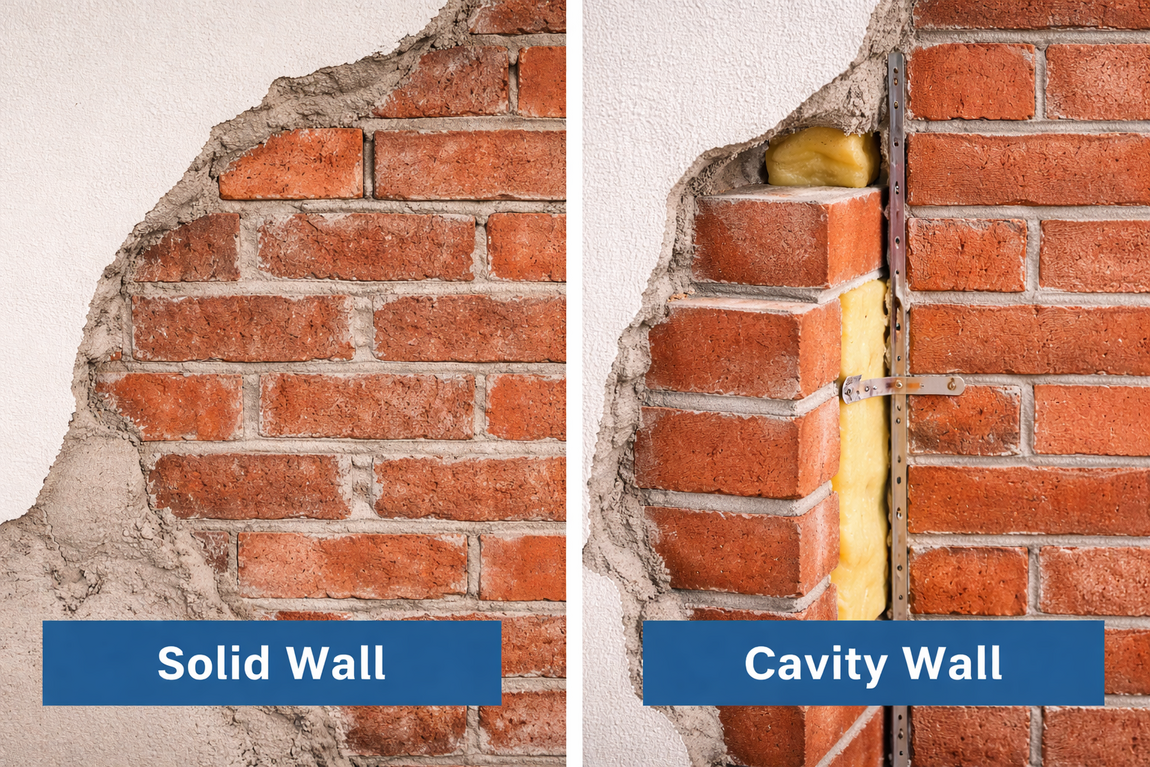
A solid wall is constructed using a single layer of masonry, usually brick or stone. Unlike modern cavity walls, there is no gap between inner and outer sections.
Solid walls were the standard method of construction in the UK until the early 20th century. Many properties built before the 1920s, particularly Victorian and Edwardian houses, use this type of wall construction.
Characteristics of solid walls include:
- No cavity or air gap between walls
- Thicker brickwork or stone construction
- Often found in older terraced or period homes
- Greater susceptibility to moisture penetration
Because solid walls are made from one continuous structure, they do not require wall ties to connect separate layers.
What Is a Cavity Wall?
Cavity walls are constructed using two separate layers of brick or block with a gap between them. This cavity helps prevent moisture from travelling through the wall and improves insulation.
Cavity walls became more common in the UK from the 1920s onwards and are now the standard method of construction for most homes.
Typical features of cavity walls include:
- Two separate layers of masonry
- A cavity or air gap between the walls
- Improved resistance to damp
- Use of wall ties to connect the two layers
This is where wall ties become essential, as they provide the structural connection between the inner and outer walls.
Why Cavity Walls Need Wall Ties
Because cavity walls consist of two separate layers, they must be tied together to maintain stability.
Wall ties are metal components embedded within the mortar joints of both walls. Their purpose is to:
- Hold the two wall leaves together
- Prevent movement between the walls
- Transfer wind loads safely
- Maintain structural stability
Without wall ties, the outer wall could move independently, leading to instability or failure.
Do Solid Walls Have Wall Ties?
No. Solid walls do not contain wall ties because they are built as a single continuous structure.
This means problems such as wall tie corrosion or wall tie failure only occur in cavity wall buildings. If your property has solid walls, cracking or movement will usually have a different cause.
How to Tell If Your Home Has Solid or Cavity Walls
There are several simple ways to identify the type of wall construction in your home.
Check the Age of the Property
Homes built before around 1920 are more likely to have solid walls, while properties built after this date typically use cavity wall construction.
Measure Wall Thickness
Solid walls are usually thicker than cavity walls. Walls around 220mm thick often indicate solid construction.
Look at the Brick Pattern
Certain brick patterns, such as alternating header bricks, may suggest solid wall construction.
If you are unsure, a professional inspection can confirm the wall type.
Why the Difference Matters
Understanding whether your home has solid or cavity walls is important for several reasons.
It can affect:
- Structural alterations
- Insulation options
- Damp prevention
- Renovation planning
- Potential wall tie issues
For cavity wall homes, wall tie condition becomes particularly important as properties age.
Wall Tie Issues in Cavity Walls
Many UK homes built between the 1930s and 1980s used mild steel wall ties. Over time these ties can corrode, particularly in damp conditions.
When corrosion occurs, the expanding metal can crack surrounding mortar joints, leading to visible damage.
Common signs include:
- Horizontal cracking along mortar lines
- Bulging or bowing brickwork
- Cracks around windows and doors
These symptoms often indicate that wall tie inspection may be required.
When to Seek Professional Advice
If you notice cracking in external brickwork or suspect structural movement, it is worth seeking professional advice. A proper inspection can determine whether the issue relates to wall ties, settlement, or another structural factor.
Early diagnosis helps prevent minor issues developing into more serious structural problems.
Understanding Your Wall Type
Whether your home has solid walls or cavity walls affects how it behaves structurally and how it should be maintained.
Solid walls do not contain wall ties, while cavity walls rely on them for stability. Knowing the difference helps homeowners understand potential issues and plan renovation or repair work more effectively.
If you are unsure about your wall type or have concerns about cracking brickwork, professional assessment is always the safest approach.